|
Optimal
Breathingtm
Asthmatic Bronchitis
Testimonial
Recommended
program for asthma.
It is absolutely necessary that we find safe alternatives to
steroids and bronchodilators. We need to utilize available
CURES
for asthma, not just symptomatic treatment.
Furthermore,
I believe there is a strong
possibility that when our youth is raised with such a strong preponderance of
the idea of drugs for health that this can re-enforce the curiosity
of drugs for recreation and whatever the youthful mind deems interesting or
appropriate.
The Optimal
Natural Breathing
System continuously reduces or eliminates the need for asthma medications.
|
BREATHING EXERCISES FOR ASTHMA
REDUCTION
It is a comfort
to many to know that there is something besides drugs and steroids that will offset the
asthmatic's breath constriction and
panic within seconds of implementing a particular maneuver/exercise. This
will not eliminate asthma but It should give you an idea that something can be
done about it other than puffing on an inhaler.
Daily for 5 minutes or when an asthma attack is
occurring
Try one or both of these two
approaches.
1. Sit out near the edge of a
fairly hard surfaced chair, stool or arm of a couch with feet flat
on the floor, or stand. Both of these positions need an erect but
not so stiff posture. Be "tallest" with your chin slightly
above the horizon. If you stand, bend your knees slightly so as to
unlock them. Place your thumbs over your kidneys (below your back
ribs and above your pelvis). Wrap your fingers around your sides.
Squeeze gently as you nose breathe long slow deep breaths into your
squeezed fingers and thumbs. If you wish, match the breathing cycle
of the animated logo at the top of this page for a timing reference.
Let your tongue lightly touch the roof or your mouth and your jaw
relax.
Take 10 complete in and out
breaths.
Did that feel good? Try
bringing your shoulders back about two to three inches as you
breathe in. Was it easier to breathe? Do it THAT way
then.
Repeat 5 -10 10 second
breathing cycles with a few seconds rest in between or for as
long as it feels good.
There are better exercises for
increasing energy but you may get real energized from this one.
Dizziness, spaceyness or otherwise confusion means you should stop
and continue your day or stop and recommence in a minute or two
after the energy has subsided or integrated within you.
Repeat it several times
daily as well.
or
2. Lie on
your back, take a big belly breath by gently (as in the "belly chest" exercise
in the Secrets of Optimal Breathing
manual). arching your back and breathing into your belly, then when your breath is at it's
biggest part of the inhale quickly raise your leg and make a shhhhhh sound all the time as
you slowly lower your leg to the surface you are lying on. Repeat 5-10 times with each leg
until the attack subsides. Let me know how that works for you. If it DOES work well or
even somewhat you should get my Breathing Exercise#2
and use it to guide and strengthen your experience. It may help to
do the Sit , Bend and Shhhhh exercise to
offset the tendency of low back strain created by hyper-extending the belly so
often.
You can use the blue box below to forward this information to
those whose health and well being are important to you.
The Cost of Treatment and Hospitalization for
Asthma in the United States
14 million people?
It is estimated that asthma affects 14 million
people in the United States and it is responsible for nearly 200,000
hospitalizations yearly. Moreover, the death rate from asthma is
increasing from 13.4 deaths per million population in 1982 to 18.8
deaths per million in 1992. In addition to the human cost, the
economic impact of asthma in the United States has been estimated to
be approximately 5.8 billion dollars.
The key to the treatment of asthma is prevention
of an acute attack which may lead to an Emergency Department visit,
or worse yet, to hospitalization. Have you ever wondered much it
costs to treat an asthmatic attack?
In the July 1999 issue of the American Journal
of Respiratory and Critical Care Medicine, Dr. Richard Stanford
and colleagues report the results of a study conducted between
October 1, 1996 and September 30, 1997 in 27 hospitals across the
United States. A total of 3,223 adult patients with asthma were
identified, of which 1,074 required hospitalization (33%). For those
successfully treated in the Emergency Department, the visit cost was
$234. For hospitalized patients the average length of stay in the
hospital was 3.8 days and the cost of treatment was $3,103.
American Journal of Respiratory and Critical
Care Medicine 160:211-215, 1999 |
General Disclaimer ; No Medical Advice. The content in
the breathing.com site is offered to the viewer for informational purposes
only, with no real or implied warranty. Reliance on any information provided
by breathing.com is solely at your own risk. breathing.com assumes no
liability or responsibility for damage or injury to persons or property
arising from any use of any product, information, idea, or instruction
contained in the materials provided to you. The user should consult their
personal physician for definitive medical advice. NEVER DISREGARD MEDICAL
ADVICE OR DELAY IN SEEKING IT BECAUSE OF SOMETHING YOU HAVE READ ON THE breathing.com
SITE.
CAUSES
Tightness across the chest, shallow breathing, reverse breathing are but a few
causes of asthma.
Signs of An Asthma Attack
Tight, Dry Cough
Wheezing
Shortness of Breath
Fast Breathing
Anxious, Scared Look
Flaring Nostrils
Read on for more subtle signals.
Triggers of Asthma Attacks
TRIGGERS:
ALLERGIES |
RECOMMENDATIONS
|
Dust
mites |
Encase bedding in
airtight covers that are hypoallergenic. Wash bedding weekly in hot water.
Do not sleep on upholstered furniture.
Remove carpets from bedrooms. If this is not possible, do not sit on the carpet, but
rather put a sheet or quilt over the carpet.
Use a dehumidifier for humid places in the home and make sure the filter is clean.
When traveling and staying in hotels, it may be advisable to bring your own linens,
particularly your own pillow. |
Molds
(outdoors)
Mildew (indoors) |
Eliminate any water
leaks in the home. Scrape moldy plaster from the walls and repaint mildewed areas.
Use a dehumidifier.
Make sure ventilation is adequate, especially in bathrooms and the laundry room.
Be sure that the clothes dryer is vented properly.
Make sure that all dehumidifiers, air conditioners, furnaces, freezers, refrigerators
and ducts are clean. |
Animals
with fur/feathers
Cats
Dogs
Mice
Hamster
Guinea pigs
Birds |
The animal's saliva
and dander (flakes of dead skin) carry allergens and penetrate the environment. Remove the
pet from the home if possible. If the pet cannot be removed, be sure to wash the pet
once a week.
Pets should never be allowed in the bedroom.
Check with a physician about using a three percent solution of tannic acid to help
neutralize the remaining allergens. |
Cockroaches |
Food should never be
left unwrapped or unsealed. Use non-toxic, anti-roach devices such as roach hotels.
Use a reputable exterminator and be sure to eliminate the patient's exposure to the
insecticide.
Seal up areas around pipes under the sink where roaches might enter. |
TRIGGERS:
IRRITANTS |
RECOMMENDATIONS |
Tobacco
smoke |
Toxic effects of
cigarette smoke are devastating for asthmatics. Asthmatics must always avoid tobacco
smoke.
Inform friends and family that the home must be smoke free and that even the scent of
smoke on clothing can trigger an attack in some sensitive individuals. |
Weather
conditions
Extremes or sudden changes in temperature
Barometric pressure or humidity |
If symptoms are severe
with weather changes, discuss adjustments in the treatment plan to avoid increased asthma
symptoms. If possible, remain indoors or limit exposure. Avoid cold, dry air.
Wear a mask and breathe through the nose rather than the mouth. |
Pollution
Fragrances
Fumes People |
The smog/pollution
index should be noted by asthmatics, particularly when patients are planning to exert
themselves. Avoid exercise on busy streets with a lot of traffic.
Car and truck exhaust should be avoided, particularly in enclosed areas like garages.
Avoid heavy scents, such as perfumes, especially in enclosed areas (elevators, buses or
offices).
Anziety. Notice when your breath goes shallow or heads up into your
chest in the presence of someone.
|
TRIGGERS:
INFECTIONS |
RECOMMENDATIONS |
Respiratory
Ear
Throat |
Treat colds and the
flu rapidly to avoid potential complications (such as pneumonia) that can worsen asthma. Bacterial
infections such as strep throat, sinus infections, pneumonia and bronchitis must be
treated for the prescribed duration.
Use good hand-washing techniques.
Avoid crowded public places, particularly during flu season.
Yearly flu immunization is recommended by some but warned against as
being the cause of the flu in the first place for many. |
TRIGGERS:
EXERCISE INDUCED ASTHMA |
RECOMMENDATIONS |
Anxiety
Fear
Panic
Depression Gasping from
overexertion due to fast, intense, running Breath
heaving due to over-exertion Gasping
and breath heaving lock up the rib muscles and inhibit easy chest
expansion. |
Asthma
is not just a physical condition. Not being able to breathe elicits feelings of anxiety,
fear and panic. Inability to alleviate these feelings leads to more severe asthma
symptoms. Besides taking responsibility for the physical care necessary to manage asthma,
the patient must seek psychosocial support through professional and community resources.
The physician may recommend a stress reduction program or seek the assistance of a mental
health provider. Careful attention to the patient's feelings will lead to better overall
asthma care and avoidance of complications like depression. |
The following medications have been linked to causing airway narrowing and should be
used cautiously for patients with asthma.
TRIGGERS:
MEDICATIONS |
RECOMMENDATIONS
|
Anti-inflammatories:
Aspirin (acetylsalicylic acid)
Voltaren
Ibuprofen/Advil
Motrin/Nuprin/Aleve
Ketoprofen / Orudis
Indomethacin
Indocin
Keterolac/Toradal
See also Prescription Drugs
|
Aspirin sensitivities
can occur in one in five individuals. Patients with nasal polyps or chronic sinusitis
are more likely to be sensitive to anti-inflammatory medications.
If the physician orders medication for pain that is similar to arthritis or a headache,
patients need to check if the product contains aspirin. |
Beta-Blockers:
Atenolol/Tenormin
Betaxolol/Betopic
Labetolol/Trandate
Metoprolol
Lopressor
Tropol XL
Nadolol/Corgard
Proprandolo/Inderal
Timolol/Blocadren
|
Patients
with high blood pressure, heart disease, glaucoma or migraines should check with their
primary care physician to determine if they are taking a Beta-blocker. These medications
can actually create more asthma symptoms or potentially uncover asthma tendencies by
causing an asthma reaction when they are introduced. |
TESTIMONIAL.
ASTHMA
Learning to breathe under the guidance of Mike White has
not only saved my life but profoundly altered its quality.
I
the first training session, Mike address my restricted breathing, which
was steadily becoming worse, despite the inhalers I was using three and
four times a day. he taught me the
Leg Lift and shhhh breath, a
deceptively simple and powerfully effective breath which stopped within
days my chronic coughing, and began to clear and relieve lungs and
bronchial tubes desperate for air.
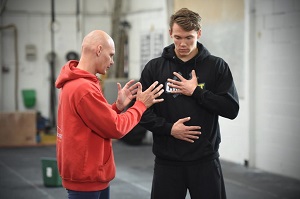
He also used
carefully controlled hand pressure and other techniques to "wring out
and soften hard and atrophies lung tissue. This
"re-birthing" of my lungs has affected my entire being. The
relief from asthma turned out to be only an introduction into fuller and
more vibrant participation in life. In the process of learning to
breathe more deeply and easily, old fears and insecurities are
beginning to dissolve. I am discovering the joyful calm that
supports life at its base.
Michael Grant White's work with
the breath is a critically
important contribution to an area of scientific
research still in its infancy.
M.D. California.
Greetings from London, England.
I thought some positive feedback might be of help.
I have been practicing TM since October of last year. I have also been
practicing your Breathing Exercise #1 for the past few weeks since ordering
the tape.
I enjoy TM but find it's effects variable and occasionally quite negative
(although this was pointed out as being natural by the excellent tutor).
Your tape on the other hand has been a total revelation from the word
go. I have been an asthmatic for 38 years and in just a few weeks of
assiduously practicing this one exercise I have received more benefit
than in twenty years of practicing all manner of other breathing
techniques.
Now here's the really good bit. I decided I would try using the "Waking Breath, -Breathing Exercise #1-
whilst doing my TM even though in basic TM practice there is no
conscious breath control (the mantra itself is supposed to encourage shallow
almost imperceptible breathing).
The result is a totally positive quality of experience both in the meditation
session and afterwards. I can't speak for other TM practitioners but the moral
seems to be that whatever practice you are engaged in get your
breathing right first and it will help and support everything else. It
really is the place to start.
I can't thank you enough. (And yes, I am now going through the Secrets
of Optimal Breathing!) A week later.
It is early days for me in studying optimal breathing but here is a
significant fact. After practicing Breathing Exercise #1 aka Waking Breath I
can hit 650 on my peak flow instrument every time (I've just tried it four
times in a row without so much as a wheeze). Now that's what I call
progress.
Recommended program
PAGE 2 ASTHMA
Includes EXERCISE
INDUCED ASTHMA
|