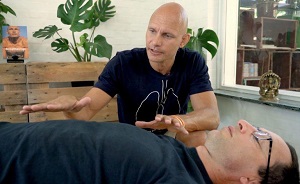
Exercise and Breathing "From proper physical exercise, one gets lightness, capacity to work, firmness, tolerance of difficulties, dimunition of physical impurities, and strengthening of digestion and metabolism" Cherak Exercise not with a
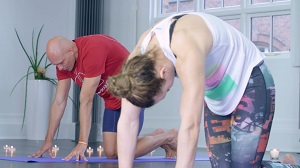
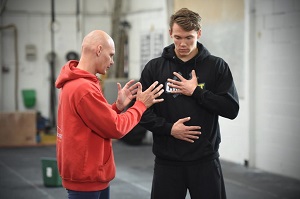
striving mind, but with a receptive body. Today's society places a lot of emphasis on healthy living by exercising three times a week and eating three good meals a day. However we probably don't realize that to achieve this, correct breathing habits must be involved as the foundation for a healthy lifestyle. As well as commencing and ending our lives, breathing is the single largest component of our daily processes. We breathe on average 15,000 times a day, and how we breathe determines how healthy we are or will be. We are conditioned to believe breathing is an involuntary action. I lost two dear friends to heart attacks, one from jogging and one from tennis. The heart must have adequate oxygen. Both friends had poor warm-up habits. Part of warming up is to get the natural breathing reflex to enlarge and stretch allowing the lungs to take in extra oxygen in the smaller air sacs towards the outer portion of the lungs. Exercising with a striving mind and insufficient breath can prove fatal. Torn or sore muscles, stressful over-training and excess free radical production often result. Low impact moderate exercise is beneficial for most. If you exercise with unbalanced breathing though, you will probably maintain a significant degree of unbalanced breathing; throughout your life. Practice makes permanent, not necessarily perfect. One should use the breath as a foundation for exertion. Many champion athletes exercise around the breath, in other words they use the sensing feeling feedback of the breath to guide them in their exertions and pacing. Others develop respiratory faults that often lead to chronic fatigue, asthma and emphysema in their later years. I train exercisers to breathe and move, not move then breathe. At least one enlightened high school coach has his athletes join the school choir. Learning to breathe better will reduce recovery times and smooth out long distance runs. Optimal breathers do not get sick. EXERCISE OR HARMFUL STRESS? GROUND AND COORDINATE IT Using proper breathing during these activities will help keep the breath balanced in the faster competitive activities. Recovery times will shorten, runs will smooth out and many will cease gasping and breath-heaving during exercise. AWARENESS You absolutely must redevelop a strong relationship with your natural breathing reflex. Clinical Exercise Physiology is at the leading edge. Yet the energy of many of its students/teachers speaks of stress and hyper-doingness. Dance therapy plus Pilates can facilitate gentleness and flexibility. Yoga and Tai Chi can heal illness, save lives and as well as develop breathing blocks that invite short term healing and long term compromise of breathing ease and depth. All these forms of exercise and movement can be absolutely wonderful, health giving but there has not been one person that I have not added ease or freedom of breath to. Something was missing. PERSONAL TRAINING Its almost always best to be trained by someone who knows more than you. The problem with the breath is finding that someone. Many personal trainers, including some exercise physiologists, design gym equipment seen in public workout rooms. After using most of the equipment I conclude that many equipment designers are not as in touch with the breath as I would have hoped. Most Ive seen being trained are too often being pushed beyond any easy breath into upper body constriction and reduced ability to breathe. I recommend specific equipment. I cant get a dear friend of mine into the most gentle of weight training because she was mishandled by an over-eager type with I'm sure good intentions that sent her home to soreness and stiffness that lasted for days. It just added to her already stressed out state. Soreness makes it more difficult to breathe. In addition, when you push the body and constrict the chest you make the heart work harder than it needs to. I believe this can exacerbate heart conditions. Sweating is great but I believe should not be at the expense of the larger, effortless breath. Workouts just take a little longer, thats all. Bring the Secrets of Optimal Natural Breathing with you to any exercise trainer. This may be helpful to see if the trainer is open to new information. Ive a weight training workout regimen outlined in the workbook. It only addresses breathing so there will be plenty to learn from them in conjunction with that. PHYSICAL THERAPY
EXERCISE AS MEDITATION This can include a walk in the woods, Tai Chi, Chi Kung, Pranayama, Aikido, walking, meditations and even selected aspects of weight training. When you take the time to breathe along with physical exercise you can actually slow down enough to be able to make the experience a moving meditation. As strange as it may seem, even pulling down a slot machine arm over and over again can be a form of meditation. An even lesser form of repetitive exertion is the card game of Solitaire. The keys to all this are: 1. How good is your breathing. 2. How do you improve it? 3. How do you maintain it? Remember, if you can't measure it, you can't manage it. |
|
|
Home |
Overview |
Free Breathing Test |
Free Newsletter |
Store |
Office Visits |
School Trainings |
Voice Clinic |
Sleep Clinic |
|
Seminars |
Articles |
Health Q & A |
Health Tips |
Testimonials |
Miscellaneous |
Affiliate Program |
Contact Us |
About Us |
Michael Grant White, Breathing.com,
1800 Camden Rd. Suite #107-36, Charlotte, NC, 28203 USA
Toll-Free Phone: 866 MY INHALE (866 694 6425)
International Phone: 1 704 332 7663
© Copyright 1997-2008 Breathing.com. All rights reserved.
|
Terms & Conditions |
Translate |
Currency Converting |
Report Deadlink
The breathing improvement
techniques, practices and products outlined in this publication are extremely
gentle, and should, if carried out as described, be beneficial
to your overall physical and psychological health. If you have any serious medical or
psychological problem, however, such as heart disease,
high blood pressure,
cancer, mental illness, or recent abdominal or chest surgery, you should consult your
health professional before undertaking these practices.