Home
 Overview
 Free Breathing Test
 Free Newsletter
 Store
 Office Visits
 Practitioner Trainings
 Voice Clinic
 Seminars
 Articles
  * Articles Index by
      Category

  * Articles Index A-M
  * Articles Index N-Z
  * Allergies
  * Anxiety, Panic, & Stress
  * Asthma
  * Breathing Development
     and Rehabilitation

  * Breathing Education
     and Research

  * Breathing Measurement
     Instruments

  * Breathing Mechanics
  * Breathing Methods
     and Breathing Work

  * Breathing Problems
     and Dysfunction

  * Children's Health
  * Chronic Illnesses
  * Emotional Issues
  * Energy
  * Environment, Pollution,
     and Toxins

  * Exercise and Athletics
  * General Health
  * Holistic Medicine and
     Alternative Modalities

  * Internal Cleansing
  * Lung Diseases
     and Ailments

  * Men's Health
  * Mental Health & Function
  * Miscellaneous
  * North Carolina
  * Nutrition and Digestion
  * Personal Growth
     and Life Skills

  * Physical Pain
  * Posture and Ergonomics
  * Relaxation
  * Respiratory Chemistry
  * Singing, Speaking,
     and Voice

  * Sleep and Sleep Apnea
  * Smoking and Other
     Substance Abuse

  * Spirituality
  * Traditional Medicine
  * Weight Loss and Obesity
  * Women's Health
 Health Q & A
 Health Tips
 Testimonials
 Miscellaneous
 Affiliate Program
 Contact Us
 About Us
 Links

How can we better serve you?


.

Obstructive Sleep Apnea

Obstructive sleep apnea has at least upper respiratory, lower respiratory, vocal tract, postural and energetic/nutritional/allergy factors.

SLEEP APNEA QUIZ
Do you snore?
Are you sleepy during the day?
Are you overweight?
Do you wake up with morning headaches?
Do you have high blood pressure?
Do you find it hard to stay awake while driving, watching TV or attending a meeting?
Do you ever wake up choking or gasping for air, or have a skipping or racing heartbeat during the night?
Has anyone watched you sleeping and told you that you hold your breath, snort, or move often during sleep?
If you answered yes to two or more of these questions, you may be suffering from sleep apnea. Untreated sleep apnea can increase the chances of driving accidents and increase your risk of stroke or heart disease.

There are two kinds of sleep apnea: obstructive apnea and central apnea. Obstructive sleep apnea is the most common type. Nine out of 10 people with sleep apnea have this type of apnea. If you have obstructive apnea, something is blocking the passage or windpipe (called the trachea) that brings air into your body. When you try to breathe, you can't get enough air because of the blockage. Your windpipe might be blocked by your tongue, tonsils or uvula (the little piece of flesh that hangs down in the back of your throat). It might also be blocked by a large amount of fatty tissue in the throat or even by relaxed throat muscles.

Central sleep apnea is rare. This type of sleep apnea is related to the function of the central nervous system. If you have this type of apnea, the muscles you use to breathe don't get the "go-ahead" signal from your brain. Either the brain doesn't send the signal, or the signal gets interrupted or (FROM MIKE: The breathing  patterns  get in the way of smooth effortless, easy inhales.)

Is sleep apnea common?

Doctors estimate that about 18 million Americans have sleep apnea. Men and people who are over 40 years old are more likely to have sleep apnea, but it can affect anyone at any age. If you are interested in meeting other people who have sleep apnea, you can visit the American Sleep Apnea Association's Web site to find the location of a support group near you.

How is sleep apnea treated via traditional  medicine?

Certain dental devices can be used to treat mild cases of obstructive sleep apnea. These devices move your jaw forward to make breathing easier.

A common treatment for sleep apnea is called "continuous positive airway pressure," or CPAP. For this treatment, you wear a special mask over your nose and mouth while you are sleeping. The mask will keep your airway open by adding pressure to the air you breathe. It helps most people who have sleep apnea.

In very few cases, surgery is necessary to remove tonsils or extra tissue from the throat.

Contact your doctor for a sleep test but let him or her know that it is a good idea to work on strengthening the breathing simultaneously while addressing sleep apnea.  Otherwise you can become dependant upon the drug or mechanical assistance to breathing for the rest of your life.

OSA can be relatively easy or VERY difficult to handle.
When the breathing gets better so can or might OSA reduce but it has several components that may be too much for only breathing to address.  Each person is unique and needs to be evaluated as such. What we do is particularly relevant for those that can not use the forced air intake devices for whatever reason.

We have been successful in getting some off of those devices partly because the person really does not like to be hooked up to the machinery and partly because for those people the equipment does not work as well as hoped for so they are more motivated to take charge of their sleep.  I really believe that OSA is mostly about breathing but some are not ready or able to do what it takes to develop their breathing.


Optimal Breathing almost always helps improve sleep.

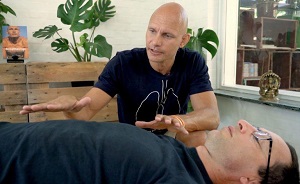
We have developed a program that requires one to visit our office for training for a few days to a few weeks.
Our self help program is at www.breathing.com/sleep-program.htm

More about sleep
Sleep Apnea Research
Sleeping and Snoring

Refer this page to up to 25 friends
Receive our FREE report on the Benefits of Better Breathing
 From (e-mail):
 To (e-mail): Up to 25 addresses. Add a comma(,) after each email address. Exclude person's name. Email address only.
 Subject:
 Your name:
 Message: Use this message or one of your own


How good is your breathing?

Take our
Free Breathing Test
and find out!

The Optimal Breathing Times 

Free Email Newsletter

Subscribe now

The Optimal Breathing Store 
Products and self-help program sets for greatly improving:

* Shortness of breath
* Anxiety & stress
* Sleep
* Energy
* Singing & speaking
* Weight loss

and much more!

Browse our catalog

"Breathing is the FIRST place not the LAST place one should investigate when any disordered energy presents itself."

Sheldon Saul Hendler, MD Ph.D., The Oxygen Breakthrough


"He who breathes most air lives most life."

Elizabeth Barrett Browning


"Mike's Optimal Breathing teachings should be incorporated into the physical exam taught in medical schools as well as other allied physical and mental health programs, particularly education, and speech, physical, and respiratory therapy."

Dr. Danielle Rose, MD, NMD, SEP
 

.


Home


Overview


Free Breathing Test


Free Newsletter


Store


Office Visits


Practitioner Trainings


Voice Clinic


Seminars


Articles


Health Q & A


Health Tips


Testimonials


Miscellaneous


Affiliate Program


Contact Us


About Us


Links

Michael Grant White, www.Breathing.com, 1820 Sunhaven Ct, Charlotte, NC, 28262 USA
USA Toll-Free Phone: 866 MY INHALE (866 694 6425)  International Phone:
1 704.594.6775  Fax: 704.597.3927

© Copyright 1997-. All text and images on this web site are protected by international copyright laws and may only be used by consent of Michael Grant White.

Terms & Conditions   |   Privacy Policy  |   Translate  |   Currency Converting  |   Report Deadlink  |   How can we better serve you?

The breathing improvement techniques, practices and products outlined in this publication are extremely gentle, and should, if carried out as described, be beneficial
to your overall physical and psychological health. If you have any serious medical or psychological problem, however, such as heart disease, high blood pressure,
cancer, mental illness, or recent abdominal or chest surgery, you should consult your health professional before undertaking these practices.

.